Make the idea visible
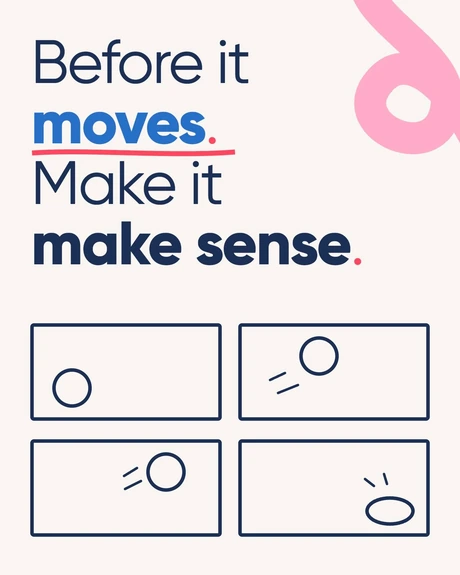
A script tells us what happens. A storyboard begins to show how it happens: where the audience is looking, what a character does and how one moment leads into the next. That difference matters because a sentence can hide a lot of visual decisions.
“The dinosaur arrives” might be a distant reveal, a close-up reaction, a shadow across a room or a comic interruption. Each tells the same event with a different emphasis. Storyboarding lets the team explore those choices before the finished scene becomes expensive to change.
The drawings need to explain the action
A storyboard does not need every image to look like final artwork. It needs enough clarity for the action, composition and emotion to be understood. A simple pose with a clear outline can be more useful than a polished drawing whose intention is unclear.
Look at the sequence, not just individual panels. Does the audience understand where the characters are? Is a reaction visible at the moment it matters? Does a cut introduce useful information or interrupt the action? The board helps expose these questions early.
Turn panels into timing
An animatic places storyboard images on a timeline, often with temporary sound. It lets the team test pauses, dialogue and transitions. Something that seems concise on paper can feel rushed when shown, while another sequence may hold attention with fewer words than expected.
At this stage, check what happens and how long it takes. The movement will still be rough. Agreeing the sequence now gives everyone a plan to follow when detailed animation begins.
Leave space for discoveries
Planning does not mean removing invention. A storyboard can reveal a better joke, a clearer visual metaphor or a more economical way to show a moment. Those discoveries are part of making the film, not evidence that the original idea failed.
Boy and the Dinosaur is built around visual comedy, music and everyday discovery. A large dinosaur beside a small boy offers immediate possibilities for scale and reaction. Storyboarding is where those possibilities can become a sequence rather than a collection of attractive poses.
What to approve in a storyboard
Review the panels as a sequence: who is doing what, where does the viewer look, and why does the next shot follow? Judge whether the idea makes sense, rather than whether the rough drawings look finished.
For example, a customer becoming confused and then seeing a solution needs a readable change. If the board only shows a smiling character beside a product, the audience may miss the problem entirely. Fix the sequence before asking for polished expressions.
- Check the message, shot order, key actions, on-screen wording and proposed transitions.
- Mark any shot whose purpose you cannot explain in a sentence.
- Reserve final timing judgements for the animatic, where panels can be held and played against audio.