Start with a point of view
A character’s appearance can attract attention, but personality gives the audience a reason to stay. Begin by thinking about what the character wants, what makes them hesitate and how they respond to the world. Those ideas can influence the silhouette, posture, expressions and movement.
This does not mean writing a long biography for every figure in a short film. A few clear traits may be enough. The important thing is that the design offers the animator useful possibilities rather than a collection of details with no performance behind them.
Test the character in action
A front-facing portrait is only one view of a character. Try poses that show excitement, disappointment, curiosity or effort. Check how the face reads at different angles and whether the body can express an idea without relying on dialogue.
Small scale matters too. A character that looks clear on a large design board may lose its expression on a phone. Strong shapes, purposeful contrasts and readable posing help the audience understand the performance in the setting where it will actually appear.
Build relationships, not isolated designs
Characters often become more interesting beside someone else. Differences in size, energy or temperament can create useful contrast. Think about how they occupy the same frame, whether their silhouettes separate and what their interaction communicates.
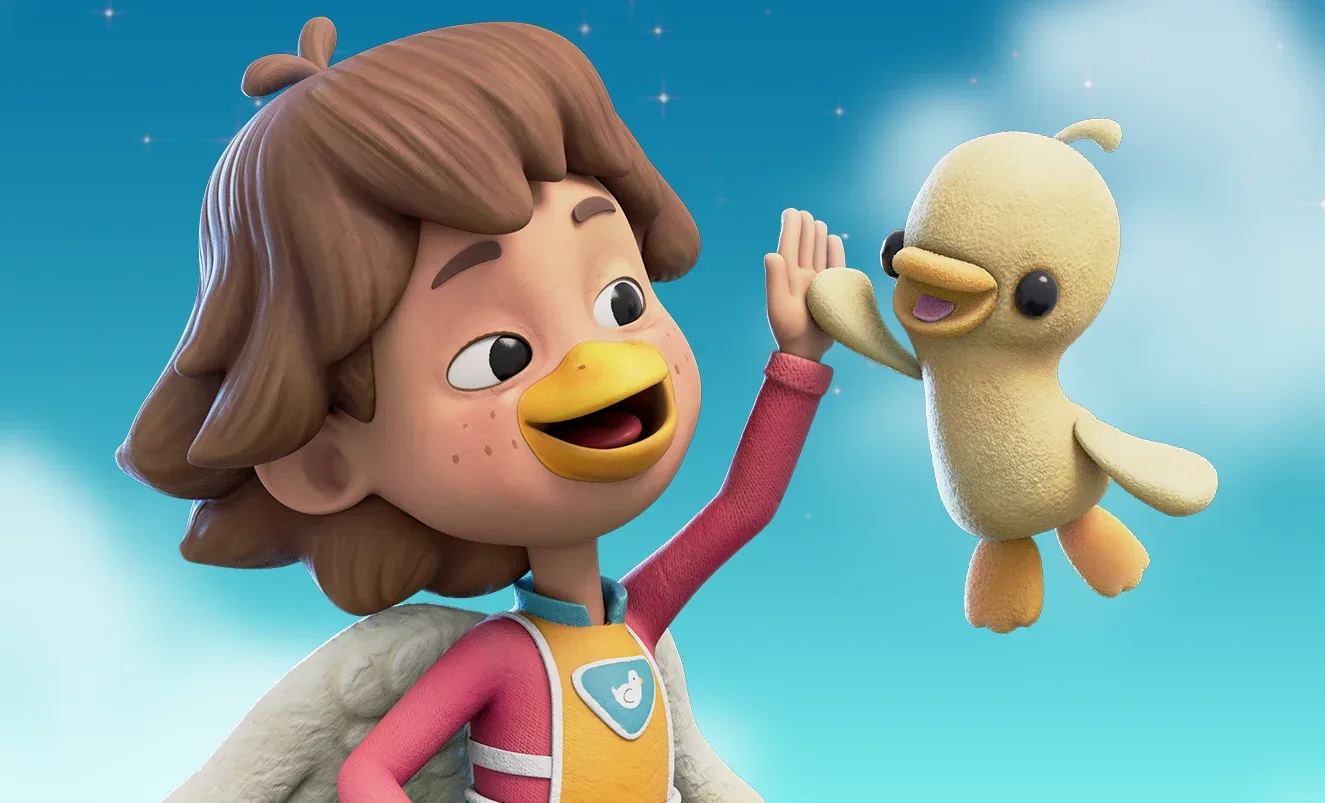
Magic Maia offers a warm example. Maia’s everyday self and her dream-world confidence share a personality, while Ducky acts as a gentle companion. The project’s design explores how costume, expressions and poses connect those ideas. The relationship helps the characters feel part of one story.
Consider how the design will be made
A character needs to suit the production approach. A drawn design, a digital 2D rig and a 3D model each have different requirements. Some features that work beautifully in a still may need development before they move convincingly. The answer is not to remove all complexity, but to understand which details are essential.
Ask how the character will be reused. Will they appear in one film, a series, an app or different campaign formats? Model sheets, expression references and a clear design language can help future work remain consistent.
When reviewing character designs, explain what feels right about the personality rather than only picking colours. Can you imagine the figure making a decision? Can a pose reveal their mood? A successful design gives the audience someone to recognise and gives the animator someone to perform.