You have time to begin
Twenty is not too late to start learning animation. It can feel that way when you find someone your age with a polished showreel and years of drawings behind them. You are seeing what they can make now while comparing it with work you haven’t learnt to make yet.
You will need practice, feedback and time. Starting at twenty does not stop you doing any of those things.
Start with the part that interests you
Learning animation can sound like learning an entire industry at once: characters to design, backgrounds to create, software to understand and scenes to light. You do not need to tackle all of that immediately.
Think about what made you interested. Was it a character’s performance, moving type in a title sequence or a drawn scene coming alive? If movement interests you, a simple figure or a ready-made character rig can let you concentrate on posing and timing. You can explore other areas as you go.
Make something small enough to finish
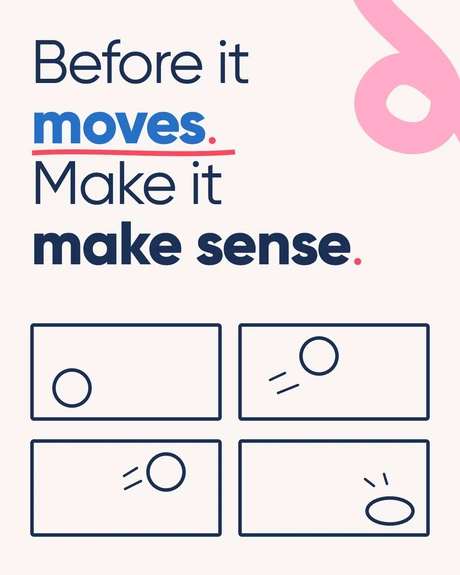
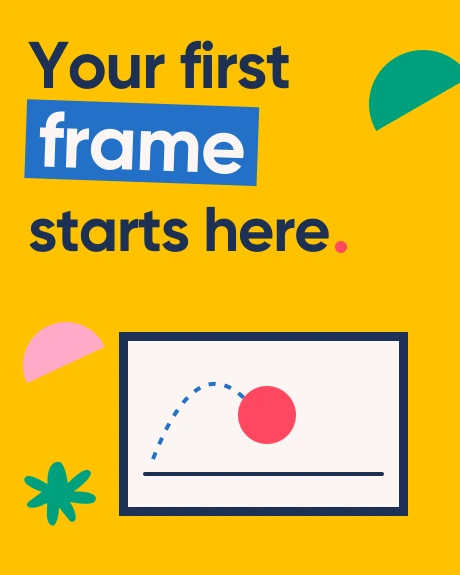
Your first project does not need a cast, a detailed world and a three-minute story. Try making a ball bounce convincingly. Then change its weight. A bowling ball and a beach ball should not move in quite the same way.
Next, give that simple object an intention. It could hesitate before an edge or try to reach a ledge. How can you suggest a decision without adding a face?
These exercises give you a manageable problem to solve. Finishing one, spotting a weakness and improving it can teach you more than getting overwhelmed halfway through a much larger film.
Tutorials are a beginning
Following a tutorial helps you learn the tools. Afterwards, change the exercise without following every step again. Make the movement slower, change the direction or give the action a different ending. You will discover which parts you understand and which parts you were copying.
Blender provides official learning resources for a practical starting point in 3D. Choose a beginner resource appropriate to your software version and stay with a small set of exercises long enough to practise them.
Ask for useful feedback
Does this object feel heavy? Can you tell where the character is looking? Does the pause feel deliberate? A specific question gives someone more to work with than “What do you think?”
Ask someone with animation experience when you can. Someone outside the field can also tell you what they understood. Then make another version: feedback becomes useful when you act on it.
Take it seriously at a manageable pace
If you are considering a career, explore the work before making an expensive commitment. Give yourself a routine you can sustain alongside your responsibilities. Save earlier versions so you can see your progress.
Courses and mentoring can provide structure and feedback; independent learning offers flexibility. Consider your time, budget and learning needs. Learning the craft and securing paid work are separate challenges, neither with a guaranteed timetable.
Your first showreel can be short
Choose examples that demonstrate the kind of work you want to do. A few carefully finished pieces can explain your abilities more clearly than a long collection of unfinished experiments.
If you use someone else’s rig, model or artwork, check its permitted uses and credit the creator. Explain which parts you made.
You may discover you love animation as a career or enjoy making things in your own time. You do not need to settle that before your first exercise. Pick one movement that interests you and have a go.