Keep the creative question in view
AI is part of the conversation around animation, but a tool does not tell us what a film should say. The audience, idea, tone and performance still need decisions. A visually striking result may be interesting without being the right answer to a brief.
At Move, we are an artist-led studio. Our approach is to consider AI as another tool available to the creative team, useful where it genuinely adds something or where a client asks us to explore it. The starting point remains the project, not a requirement to use a particular technology.
Separate exploration from a finished promise
Trying an approach during development is different from relying on it for final delivery. A test can reveal a useful direction, but it also needs to reveal whether the team can control and revise it. Can the character remain consistent? Can the action change to answer a note? Can a sequence be adapted for another format?
These questions belong to production planning. The relevant answer depends on the tool, the task and the required result. Rather than promising that AI makes every project faster, ask where it helps and what work remains for the artists.
Make the process understandable
Clients should know where AI forms part of their project and why it is being used. That conversation can include the material going into a tool, the intended use of the output and any project-specific restrictions. Clarity is more useful than using “AI-powered” as a broad label that explains very little.
Our artists lead the process, make the creative decisions and shape the finished work. That responsibility includes judging whether an experiment should become part of the production or remain an experiment. Sometimes the useful decision is to use another method.
Let the work explain the standard
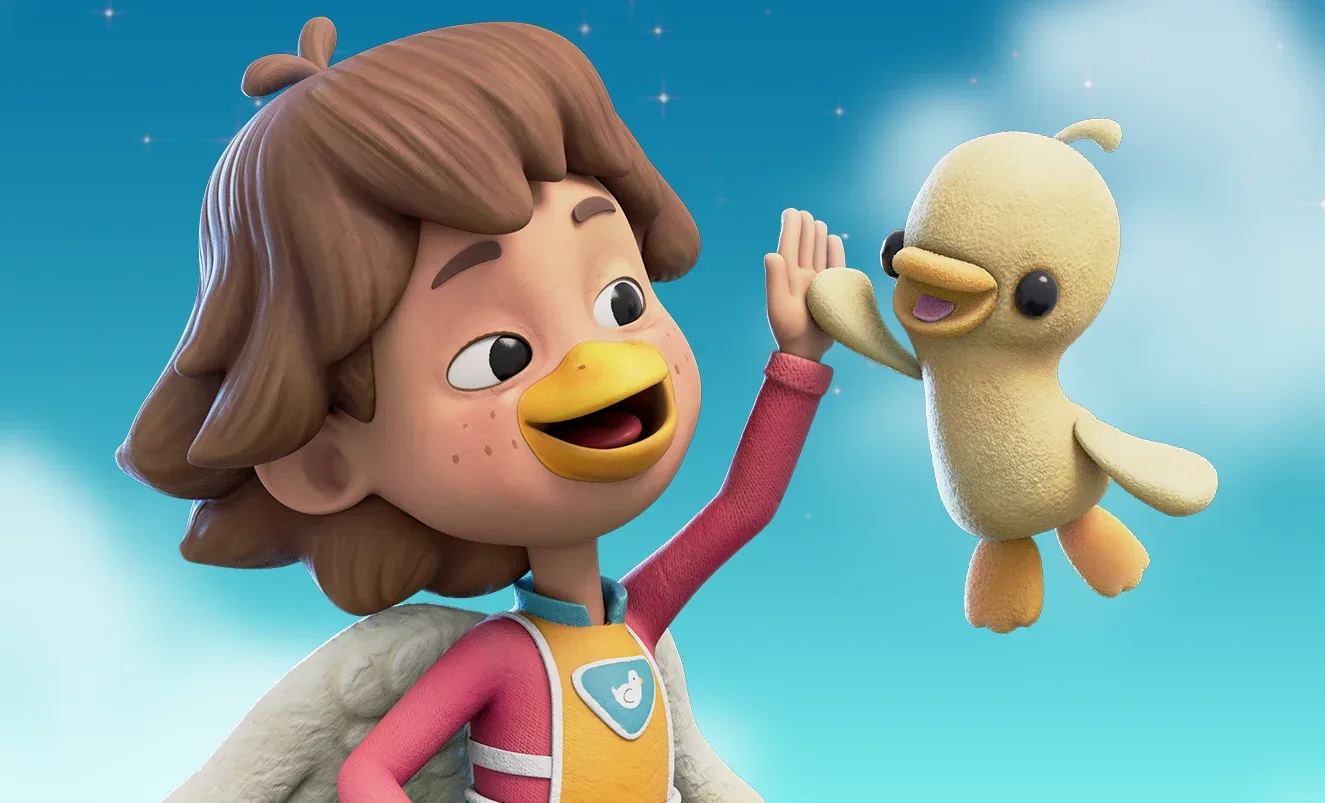
Magic Maia’s expressive characters and dream-world design show the kind of coherence a finished project needs. The example is about the creative standard, not an AI demonstration. The animation projects currently showcased in our portfolio were created by our artists without generative AI. If that changes, we will make clear where AI has played a part.
A useful client conversation is therefore specific: what are we trying to improve, what will the tool contribute and how will the result be reviewed? This leaves room for curiosity without losing the judgement that makes the work belong to its story.
The tools may change, but the craft still matters. We want new possibilities to support ideas, imagination and care—not replace the conversation about what a project is really for.