What are we trying to improve?
Begin with the reason for considering AI. Is the team exploring visual directions, testing an idea or investigating a specific production problem? A clear purpose makes it possible to judge the result. “Use AI” on its own is not a creative objective.
Define what success would look like and compare it with other approaches. A new method should earn its place in the production by helping the project. Curiosity is useful, but the client and artists still need a shared understanding of what is being tested.
What material would go into the tool?
Identify the proposed inputs before uploading project files. Ask whether the material is approved for that use and whether it includes confidential information, licensed assets or someone’s likeness. Check the relevant provider terms and the project’s own requirements rather than assuming every tool handles material in the same way.
For an overview of the questions organisations can consider, the World Intellectual Property Organization publishes guidance on generative AI and intellectual property. It provides a useful starting point for a project-specific review; it does not replace checking the actual tool and agreement involved.
How will the result be controlled?
Test more than the most attractive output. Check whether the team can maintain character identity, revise a particular moment and produce the required formats. Decide who will review the results and what criteria they will use. A visually interesting test may still be unsuitable for a finished campaign.
Ask what will happen if the method does not work as intended. A production plan should account for uncertainty without making the delivery depend on an untested assumption. It may be sensible to keep an experiment separate from the critical path.
How will its role be explained?
Agree what the client needs to know about the process and how any relevant use will be described. At Move, artists lead the creative decisions, and we are open about where and why AI is used when it forms part of a project.
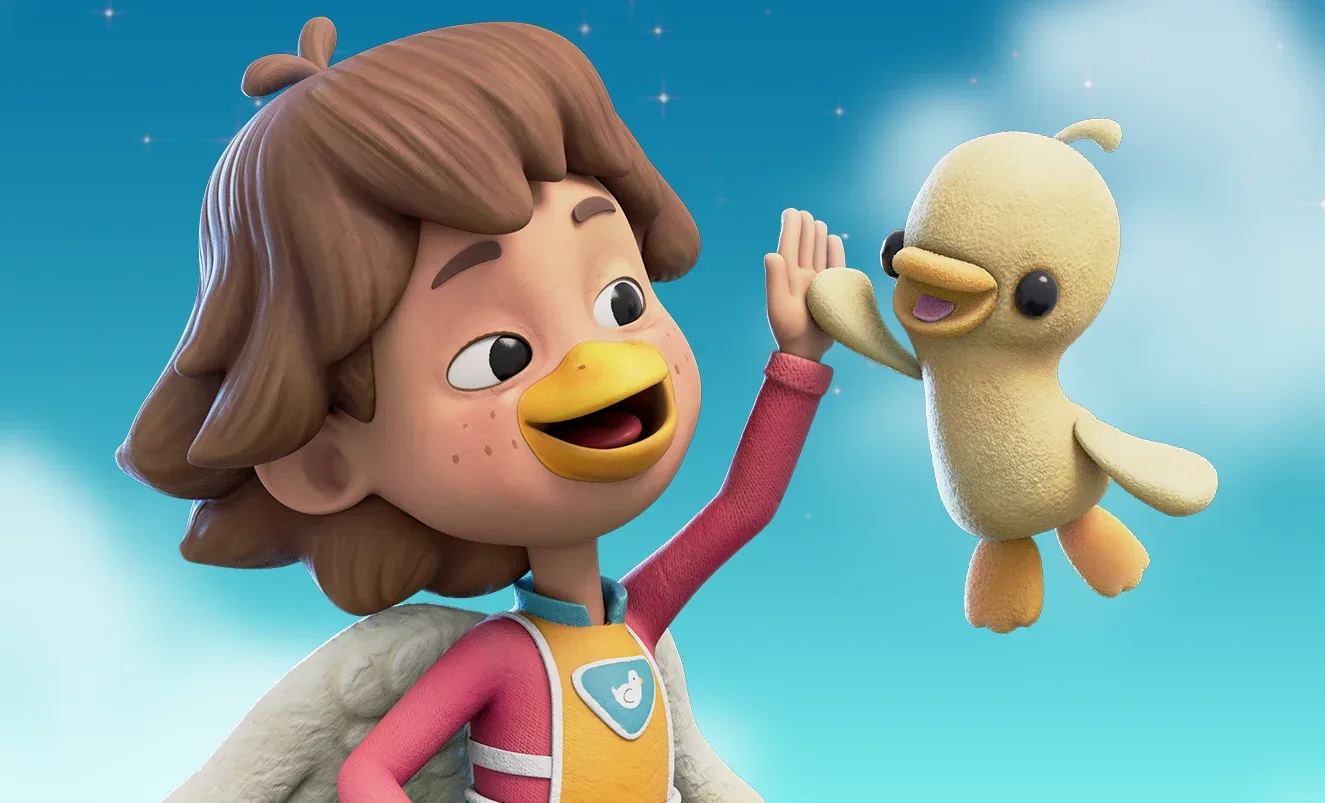
Boy and the Dinosaur is shown here as an example of an established character world created by artists without generative AI. Its relevance is the need for a coherent design and performance across scenes, not a demonstration of an AI workflow.
A useful conversation ends with specific answers: the purpose, the inputs, the approvals, the revision method and the delivery requirements. Those answers give experimentation a clear place within the work. They also let the team decide when a different tool is the better choice.